

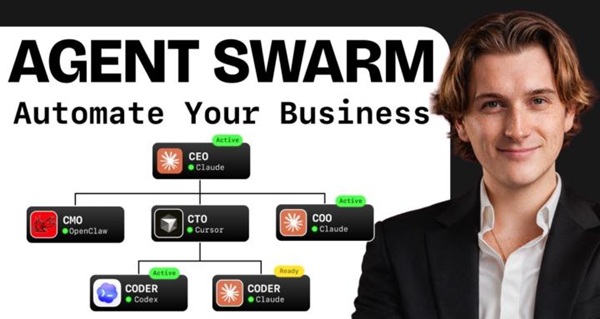
The Cortex roadmap, a visionary framework for deploying an AI Agent Swarm, promises to revolutionize business operations by transitioning from manual labor to a 24/7 automated workforce.
Cortex
The Cortex system stands as a monumental leap in the evolution of business automation, moving beyond the isolated functionalities of individual AI tools to embrace a holistic, collaborative approach. At its heart lies the concept of an AI Agent Swarm – a coordinated team of artificial intelligence entities meticulously designed to automate a vast spectrum of business operations. This isn’t just about streamlining tasks; it’s about fundamentally transforming the operational paradigm, enabling businesses to run with an unprecedented level of autonomy and efficiency. The primary objective is ambitious yet clear: to usher in an era where human intervention in repetitive, administrative, and creative busywork becomes largely obsolete, replaced by a tireless, intelligent, and perpetually active digital workforce. This transition, envisioned by the Cortex roadmap, is not merely an incremental improvement but a fundamental shift towards a future where businesses operate on autopilot, optimizing productivity and freeing human capital for higher-level strategic thinking and innovation.
The elegance of the Cortex system lies in its ability to integrate multiple, powerful AI frameworks, including Claude Code, OpenClaw, and Codex, into a single, cohesive operational unit. This multi-framework integration is a critical differentiator, allowing the AI Agent Swarm to leverage the unique strengths of each technology, thereby expanding its capabilities and adaptability across diverse business sectors. Imagine a scenario where a single system can seamlessly generate advertising creatives, draft compelling social media content, manage sales outreach, and even handle customer service inquiries – all without constant human oversight.
This integrated approach ensures that the AI workforce remains versatile and robust, capable of tackling complex, multi-faceted tasks that would typically require a team of human specialists. The deliverables associated with the Cortex roadmap further underscore its comprehensive nature, promising over 42 pre-built agents, 100+ skill files, and a centralized command center. These assets are not just tools; they are the building blocks for a fully operational AI team, designed to be accessible to a wide range of users, from solopreneurs striving for scalability to agency owners seeking to optimize client fulfillment, and creators aiming to eliminate administrative burdens. The vision is clear: to empower businesses of all sizes to harness the power of AI for continuous, autonomous growth.
The Core Philosophy of Autopilot Operations
The fundamental philosophy underpinning the Cortex system is the drive towards “Autopilot Operations.” This isn’t just a catchy phrase; it represents a profound shift in how businesses can function. Instead of being reactive or perpetually reliant on human input for day-to-day tasks, Cortex enables a proactive, self-managing enterprise. The AI Agent Swarm is engineered to handle core business functions—content creation, advertising campaigns, sales outreach, and even customer engagement—with minimal human intervention. This means a business can run continuously, 24/7, without the constraints of human working hours, geographical limitations, or the inherent inefficiencies that often plague manual processes. The promise of Cortex is to liberate business owners and their teams from the grind of repetitive tasks, allowing them to focus on strategic growth, innovation, and direct engagement with their customers on a more meaningful level. The implications of this are vast, allowing solopreneurs to scale their operations without needing to hire extensive staff, and enabling larger agencies to drastically reduce operational costs while improving output quality and consistency.
This philosophy extends beyond mere task automation; it’s about creating a truly autonomous business entity. The centralized command center, a key deliverable, exemplifies this by providing a single pane of glass for monitoring and managing all active agents. This unified management approach ensures that disparate AI functions are not just integrated but orchestrated in a harmonious and efficient manner. The goal is to provide a comprehensive, end-to-end solution that takes a business from zero automation to a fully operational AI team within a surprisingly short timeframe – a 30-day build path, as outlined in the roadmap. This rapid deployment capability, coupled with daily custom skill drops, ensures that users can quickly adapt and evolve their AI workforce to meet changing business needs. The emphasis on “unified management” means that even with a multitude of agents performing diverse tasks, the entire system operates as a cohesive unit, working towards overarching business objectives, thereby maximizing efficiency and minimizing the potential for operational silos.
24/7 Productivity and Unified Management
The dual pillars of 24/7 productivity and unified management are central to the Cortex system’s promise. The concept of an AI workforce operating continuously, without breaks, holidays, or the need for supervision, is a game-changer for businesses seeking to maximize output and responsiveness. This continuous operation capability means that marketing campaigns can run around the clock, customer queries can be addressed instantly, and content can be generated consistently, regardless of time zones or human availability. For businesses operating in global markets, this provides an unparalleled competitive advantage, ensuring that they can engage with customers and prospects across the globe at any hour. The economic benefits are equally compelling, as it translates to a significant reduction in labor costs, increased efficiency, and the ability to scale operations rapidly without the traditional overhead associated with human expansion. The value proposition here is clear: more work, higher quality, with fewer resources.
Complementing this relentless productivity is the commitment to unified management. The Cortex Swarm Interface Dashboard is designed as the nerve center for this intelligent workforce, providing a singular point of control for monitoring, configuring, and deploying agents. This eliminates the complexity often associated with managing multiple AI tools, each with its own interface and operational quirks. Instead, users gain a clear, consolidated view of their entire AI ecosystem, allowing for intuitive oversight and strategic adjustments. This unified approach not only simplifies management but also enhances the collaborative potential of the AI swarm. Agents, though specialized, can share data and insights through the central dashboard, enabling a more intelligent and coordinated response to business challenges. Whether it’s analyzing ad performance, identifying viral content trends, or optimizing sales funnels, the unified management system ensures that all components of the Cortex swarm are working in concert, driving towards the overarching goals of automation and business growth.
Functional Components and Deliverables
The Cortex roadmap isn’t just a theoretical framework; it’s a practical blueprint laden with tangible assets designed for immediate implementation. The core functional components and deliverables represent a comprehensive toolkit for businesses embarking on their automation journey. At the forefront are over 42 pre-built AI agents, each specialized for distinct tasks. Imagine having a dedicated agent for Meta Ads, tirelessly generating advertising creatives, or a Viral Content Agent consistently churning out innovative content ideas and scripts. These agents are not generic; they are fine-tuned for high-value marketing and creative functions, enabling businesses to automate some of their most crucial and time-consuming processes right out of the box.
The inclusion of 100+ Claude Skill Files further augments these agents’ capabilities, providing a rich library of pre-configured skills that can be downloaded and deployed to enhance performance, adapt to specific industry nuances, or tackle new challenges. This combination of ready-to-use agents and expandable skill sets ensures that the Cortex system is both immediately impactful and highly adaptable, catering to a wide array of business needs and growth trajectories. The value proposition here is immense, offering a shortcut to advanced automation without requiring extensive technical development or specialized AI expertise.
Beyond the agents and skill files, the Cortex system provides the essential infrastructure for managing this sophisticated AI workforce. The Swarm Interface Dashboard stands as the central command center, offering a user-friendly interface to monitor, manage, and deploy all active agents. This dashboard is crucial for maintaining oversight and ensuring that the AI swarm operates efficiently and in alignment with business objectives. It transforms what could be a complex web of interconnected AI processes into an intuitive, manageable system, accessible even to users with varying technical proficiencies. Furthermore, the inclusion of a structured 30-Day Roadmap outlines a clear build path, guiding users from foundational setup to a fully operational AI team. This roadmap is supported by daily custom skill drops, suggesting an iterative deployment process where new capabilities are introduced progressively, allowing users to gradually integrate and scale their AI workforce. This phased approach mitigates the complexities of large-scale AI implementation, making the transition smoother and more manageable.
| Component | Description | Key Benefits |
|---|---|---|
| Pre-Built AI Agents | Over 42 specialized, ready-to-deploy agents for various tasks (e.g., Meta Ads, Viral Content, Instagram Carousel). | Instant Automation: Rapid deployment for critical business functions. <br> Task Specialization: High-quality output due to agents’ focused expertise. <br> Reduced Development Time: No need to build agents from scratch. |
| Claude Skill Files | 100+ downloadable files to enhance agent capabilities and adapt to specific needs. | Enhanced Versatility: Agents can learn new skills and adapt to evolving requirements. <br> Customization: Tailor agent behavior to specific industry or business processes. <br> Continuous Improvement: Access to a growing library of advanced functionalities. |
| Swarm Interface Dashboard | Centralized command center for monitoring and managing all active agents. | Unified Control: Single point of management for the entire AI swarm. <br> Operational Visibility: Real-time monitoring of agent performance and activities. <br> Simplified Management: Intuitive interface for non-technical users. |
| 30-Day Roadmap | Structured build path with daily custom skill drops for incremental deployment. | Guided Implementation: Clear steps from zero automation to a full AI team. <br> Progressive Integration: Gradual skill deployment for easier adoption. <br> Accelerated ROI: Faster time to a fully functional automated workforce. |
| Technical Integrations | Coordinates across Claude Code, OpenClaw, and Codex frameworks. | Cross-Platform Execution: Execute complex tasks across different AI technologies. <br> Robustness & Flexibility: Leverages the strengths of multiple leading AI frameworks. <br> Cohesive Workflow: Seamless operation from a single interface. |
This table concisely summarizes the core assets and their benefits within the Cortex ecosystem, highlighting how each component contributes to a comprehensive and efficient automation solution.
Kyle Herbel
Kyle Herbel is the visionary architect behind the Cortex roadmap, a strategic framework that outlines a revolutionary approach to deploying an AI Agent Swarm designed to automate business operations. His work represents a significant contribution to the field of artificial intelligence and business process automation, moving beyond theoretical concepts to deliver a practical and implementable solution. Herbel’s understanding of the complexities and pain points faced by modern businesses—from solopreneurs struggling with scale to agencies burdened by repetitive tasks—is evident in the thoughtful design of the Cortex system. He recognized the limitations of isolated AI tools and instead championed the idea of a coordinated team of AI entities, functioning collaboratively to manage diverse business sectors simultaneously. This holistic perspective is what distinguishes the Cortex roadmap, positioning it not merely as a set of tools, but as a comprehensive strategy for achieving true business autonomy.
Herbel’s roadmap is precise in its objectives, aiming to transition businesses from manual labor to a 24/7 automated workforce. This ambition is underpinned by a deep understanding of the current technological landscape, evidenced by the strategic integration of multiple leading AI frameworks, including Claude Code, OpenClaw, and Codex. This multi-framework approach is a testament to Herbel’s foresight, ensuring that the Cortex system is robust, versatile, and capable of leveraging the best functionalities available in the AI ecosystem. The tangible deliverables associated with his roadmap further solidify its practical utility: over 42 pre-built agents, 100+ skill files, and a centralized command center. These are not just numbers; they are the building blocks for a powerful, ready-to-deploy AI team, meticulously crafted under Herbel’s guidance. His design philosophy emphasizes accessibility, ensuring that the roadmap is not exclusively for AI experts but is tailored for various skill levels, making advanced automation attainable for a broader audience.
Kyle Herbel’s Vision for AI Agent Swarms
Kyle Herbel’s vision for AI Agent Swarms is rooted in a profound understanding of the limitations inherent in traditional business operations and the fragmented nature of current AI solutions. He recognized that while individual AI tools could perform specific tasks efficiently, the true power lay in their collective, coordinated effort. His concept of an “AI Agent Swarm” moves beyond mere automation; it envisions a fully integrated, intelligent workforce capable of managing entire business sectors autonomously. This isn’t just about robots doing repetitive tasks; it’s about a team of specialized AI entities communicating, collaborating, and making decisions to achieve overarching business objectives. Herbel’s genius lies in conceptualizing this swarm not as a collection of disparate parts, but as a living, breathing digital organism that can adapt, learn, and continuously optimize its operations.
The core of Kyle Herbel’s vision is to create a seamless transition for businesses from being heavily reliant on manual labor to operating on a 24/7 automated model. He understood that for this transition to be successful, the system needed to be robust, versatile, and user-friendly. This led to the strategic decision to integrate multiple, powerful AI frameworks like Claude Code, OpenClaw, and Codex. This integration is not just a technical detail; it’s a foundational element of his vision, ensuring that the AI swarm can leverage the unique strengths of each framework to tackle complex tasks across different platforms. Herbel’s foresight in anticipating the need for such a multi-faceted approach means that the Cortex system isn’t just a solution for today’s problems but is built to evolve and adapt to the challenges of tomorrow’s digital landscape. His vision is about empowering businesses to achieve unprecedented levels of efficiency and growth, freeing human potential for creativity and strategy.
The Technical Integration Strategy Developed by Kyle Herbel
The technical integration strategy, meticulously developed by Kyle Herbel, is a defining feature of the Cortex system and a testament to his deep technical acumen. He understood that for an AI Agent Swarm to be truly effective and versatile, it could not be confined to a single AI framework. Instead, Herbel engineered the Cortex architecture to seamlessly coordinate across three primary and powerful AI environments simultaneously: Claude Code, OpenClaw, and Codex. This deliberate multi-framework approach is not merely about combining technologies; it’s about creating a synergistic ecosystem where the strengths of each framework are leveraged to their fullest potential. For example, Claude Code might excel in natural language processing and creative content generation, while OpenClaw could provide robust capabilities for data extraction and external system interaction, and Codex might be optimized for code generation or complex logical operations.
This strategic integration allows the Cortex swarm to execute complex, multi-stage tasks across different platforms from a single, unified interface. Imagine an advertising campaign where an agent uses Claude Code to generate compelling ad copy, then utilizes OpenClaw to integrate with an ad platform and manage bidding strategies, and finally employs Codex for data analysis and optimization—all orchestrated from the Swarm Interface Dashboard. This level of technical sophistication ensures that the AI workforce remains cohesive, manageable, and incredibly powerful, capable of handling intricate business processes that would typically require a team of human specialists or multiple, disconnected AI tools. Kyle Herbel’s focus on this robust technical foundation ensures that the Cortex system isn’t just a collection of smart tools but a truly intelligent, integrated, and high-performing AI team, ready to tackle sophisticated content, sales, and operational challenges with unparalleled efficiency and precision.
The Implementation and Audience Focus by Kyle Herbel
Kyle Herbel’s strategic approach to the implementation and audience focus of the Cortex roadmap highlights his understanding of real-world business needs and the challenges of adopting new technologies. He recognized that a powerful system, no matter how advanced, would only achieve widespread adoption if it was accessible and had a clear, actionable path to implementation. This led to the development of the “30-Day Build Path,” a structured journey designed to guide businesses from having no AI automation to possessing a fully operational AI workforce within a month. This phased implementation strategy, supported by daily custom skill drops, ensures that users aren’t overwhelmed by the complexity of deploying a sophisticated AI swarm. Instead, they can gradually integrate and scale their AI capabilities
Cortex
The Cortex system represents a revolutionary leap in the automation of business processes, designed to harness the collective power of AI agents working in harmony. Developed under the careful guidance of Kyle Herbel, this innovative framework offers businesses the ability to streamline operations, improve efficiency, and adapt quickly to market demands. With over 42 pre-built agents and 100+ skill files, the Cortex roadmap is more than just an ambitious technical blueprint; it serves as a comprehensive guide for businesses keen on embracing the future of automation.
The Structure of the Cortex System
The architecture of the Cortex system is meticulously crafted to ensure maximum efficiency, versatility, and ease of use. At its core, the Cortex framework is structured around the concept of modularity. Every component, from the pre-built agents to the skill files, is designed to be plug-and-play, allowing businesses to customize their automation experience according to their unique needs. This modular approach not only simplifies the deployment process but also allows businesses to scale their automation capabilities as they grow.
The flexible nature of the Cortex system encourages experimentation and innovation. Businesses can swap agents and skills as their requirements evolve, ensuring that they are not locked into a static model but rather can constantly iterate toward improved outcomes. This adaptability is vital in today’s fast-paced market, where businesses must be nimble in response to changing conditions. The anticipation of future demands has been central in Herbel’s design philosophy, resulting in a system that doesn’t just meet today’s needs but is built for tomorrow’s challenges.
Furthermore, the Cortex architecture is supported by a centralized command center, which provides a comprehensive overview of all operations. This dashboard enables users to monitor the performance of their AI agents in real-time, identify bottlenecks, and make data-driven decisions that optimize the entire operation. By providing users with actionable insights and clear visibility into their automated processes, the Cortex system ensures that businesses can maintain a competitive edge while effectively managing their resources.
The Accessibility Factor of Cortex
One of the standout features of the Cortex system is its commitment to accessibility. Recognizing that not all business leaders have a technical background, Kyle Herbel has prioritized creating an interface that is intuitive and user-friendly. This vision leads to ensuring that the power of the Cortex framework is available to a broader audience, including those who may lack deep expertise in AI or automation.
Herbel’s approach emphasizes education as a key component of accessibility. In conjunction with the user-friendly interface, the Cortex system is supplemented with resources such as tutorials, webinars, and customer support channels. These resources guide users step by step through the process of implementing AI automation, fostering a sense of competence and confidence among users. The underlying message is clear: automation should not be a daunting process but an empowering journey toward enhanced productivity.
Moreover, the roadmap from Cortex aims to democratize technology. By breaking down barriers to entry and equipping diverse business leaders with the tools necessary for success, the system puts advanced automation within reach. The Cortex framework serves as a bridge between AI innovation and traditional business operations, elevating the capabilities of organizations regardless of their size or industry.
Future-Proofing with Cortex
The evolving landscape of business demands solutions that are not just effective today but are also adaptable for tomorrow. Kyle Herbel has strategically interwoven future-proofing into every layer of the Cortex system. This foresight has shaped a framework that is not only robust and efficient but can evolve with the changing technological landscape.
Central to this future-proofing is the integration of multiple AI frameworks—Claude Code, OpenClaw, and Codex. By leveraging the strengths of these distinct systems, Cortex promotes flexibility in responding to emerging technologies. Herbel understands that the field of AI is dynamic, with new tools, capabilities, and methodologies continuously developing. This strategic choice ensures that businesses using the Cortex system will not become obsolete as new innovations arise.
In addition to technology agility, Cortex is also designed to adapt to shifting business priorities and worker expectations. As companies move towards more hybrid and remote work structures, the Cortex system stands ready to facilitate this evolution. Its design supports virtual collaboration, enabling teams to interact seamlessly regardless of geography. By future-proofing their operations, businesses can stay competitive and relevant in an ever-evolving marketplace.
Kyle Herbel
Kyle Herbel has emerged as a visionary in the world of artificial intelligence and business automation. His work in developing the Cortex system has reshaped the landscape, giving enterprise-grade solutions to businesses that may have previously felt hindered by the complexity of AI technology. Herbel’s insights into automation, coupled with a deep understanding of organizational needs, have led him to create a platform that is not only powerful but also user-friendly.
The Mind Behind Cortex
As the chief architect behind the Cortex framework, Kyle Herbel has leveraged his extensive experience in technology and strategic planning to create a cohesive ecosystem of automation. Understanding that technology must serve people and be built around their needs has been central to his philosophy. This user-centered design approach ensures that even non-technical users can benefit from the advanced functionalities of AI.
Herbel’s background encompasses a combination of technical expertise and business acumen, allowing him to create solutions that bridge the gap between complex AI tools and their everyday application within businesses. His vision transcends just automating tasks; it aims to enhance operational efficiency and empower users to focus on strategic activities rather than mundane, repetitive actions.
Furthermore, his commitment to innovation and continuous improvement ensures that Cortex remains relevant. By actively soliciting feedback from businesses and adapting his system to meet their evolving needs, Herbel enacts a model of responsive innovation. His relentless pursuit of creating effective solutions demonstrates a fundamental understanding of technological adaptation that today’s businesses require.
Kyle Herbel’s Impact on Businesses
The impact of Kyle Herbel’s work is reflected in the growth and transformation of countless businesses that have embraced the Cortex system. By providing a practical and actionable roadmap, Herbel has enabled organizations to harness the power of AI while minimizing the barriers to entry. This has allowed firms, regardless of their size or industry, to reap the benefits of AI-driven automation.
Beyond just increasing efficiency, the Cortex system fosters a culture of innovation within organizations. Employees are encouraged to explore new ways to utilize AI in their workflows, leading to more creative problem-solving and strategic thinking. Businesses are not just adopting technology; they are evolving to become more resilient and agile in the face of challenges.
Herbel’s influence extends beyond the immediate enhancements of productivity; he is empowering businesses to redefine their operational strategies. By shifting the focus from traditional labor-intensive practices to automated solutions, companies can unlock new avenues for growth and establish themselves as leaders in their respective markets.
Vision for the Future of AI
As AI technology continues to progress, Kyle Herbel remains at the forefront of this revolution. His vision extends to a future where AI is embedded within every facet of business operations, fundamentally shifting how organizations function. The proliferation of AI Agents and swarms is a step toward fulfilling this ambition, demonstrating that collaboration among various AI components will yield far greater outcomes than relying on standalone solutions.
Herbel advocates for the development of ethical AI practices and responsible integrations, ensuring that the technological advancements of tomorrow align with social values and business integrity. Companies leveraging the Cortex system are not merely participants in this transformation; they are leaders charting a course toward a future enriched by technology yet rooted in human values.
In conclusion, Kyle Herbel’s commitment to redefining automation through the Cortex system illustrates a profound understanding of modern business needs. By creating a robust, accessible, and adaptable structure, he empowers organizations to navigate the complexities of the digital landscape. The vision of an AI-driven future is not just a potential dream; through Herbel’s efforts, it is a tangible reality, positioned to transform the way businesses operate.
Conclusion
The Cortex system, under the visionary leadership of Kyle Herbel, sets a new standard in the realm of AI-driven automation. Through its user-centered design, robust technical integration, and future-proof features, the framework transforms traditional business operations, enabling companies to thrive in a rapidly evolving market. Herbel’s foresight in creating an accessible, versatile, and powerful tool underscores his commitment to innovation, empowering organizations to unlock their full potential through advanced technology. The capabilities embedded within the Cortex structure promise not only immediate benefits but a pathway towards sustained growth and adaptability in the face of future challenges.
Sales Page:_https://www.skool.com/cortex
Delivery time: 12 -24hrs after paid



Reviews
There are no reviews yet.